The chimney sweep process
What to Expect on the Day of Your Sweep
Once your appointment is booked, you’ll receive a confirmation by text message. If this is your first time using our services, you’ll also receive a welcome email containing important information, including our Terms and Conditions. We kindly ask that you take a few minutes to read through this so you know exactly what to expect. If you have any questions at all, we’re always happy to help.
Preparing and Protecting Your Home
On the day of your sweep, we take great care to protect your home. Clean protective sheets and floor runners will be laid from your front door right through to your hearth to ensure your carpets and flooring remain spotless throughout the visit.
The Sweeping Process
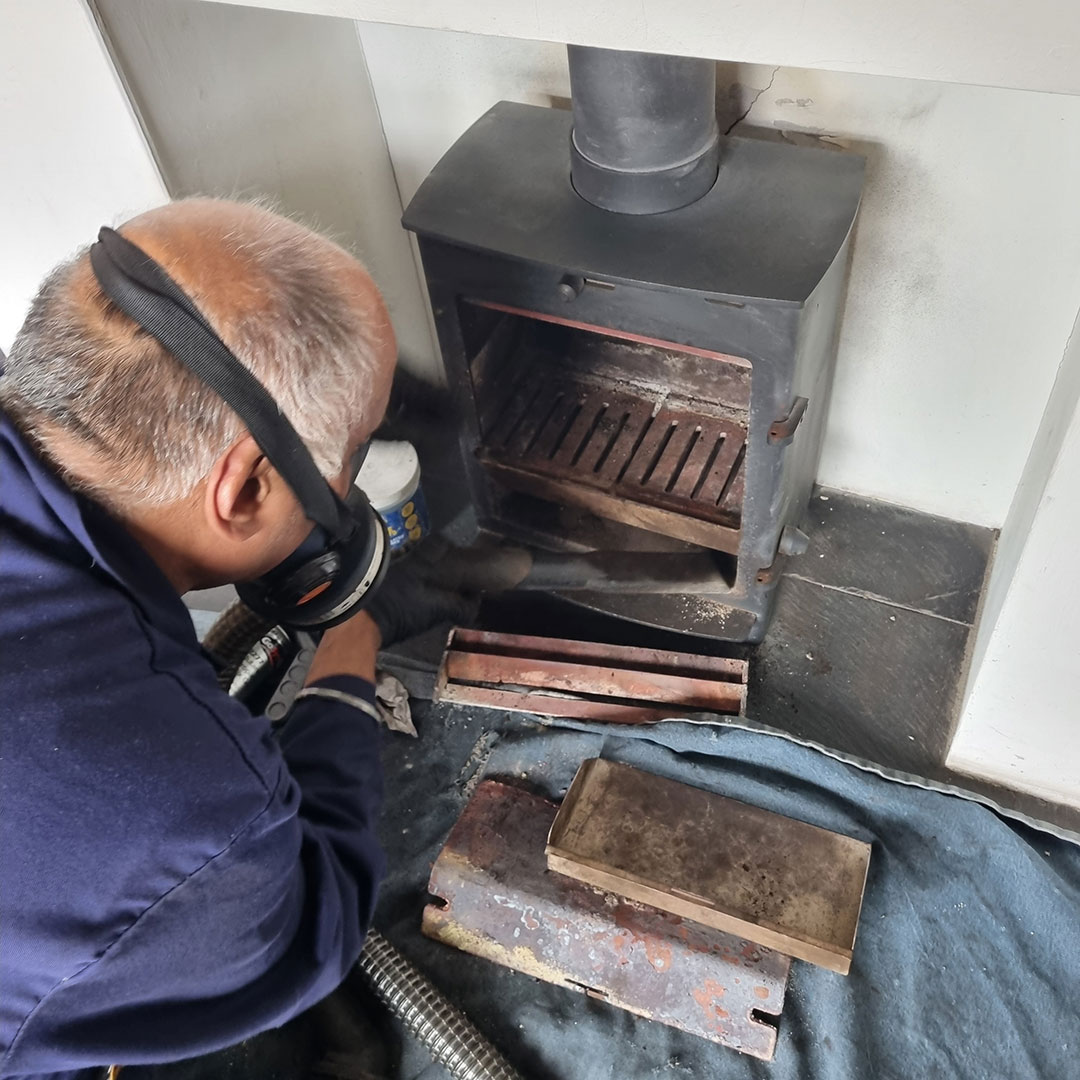
For wood-burning and multi-fuel stoves, we carefully dismantle the appliance and inspect all internal components for signs of wear, damage, or potential issues.
A sweep sheet is securely fitted to the appliance using magnetic strips, allowing our sweep rods to pass safely into the flue. During the sweeping process, we use professional industrial H-Class vacuums specifically designed to contain even the finest dust particles. This ensures that your chimney is left clean — and so is your home.
Once sweeping is complete, all internal components are carefully reassembled. We then carry out a smoke pellet test to ensure the flue is drawing smoke efficiently and that all seals and joints are intact and functioning correctly.
Open fires follow a very similar procedure, although we may use alternative methods to safely seal the fireplace opening during the sweep.
Certification and Safety
If your stove or appliance passes our inspection, we will issue a NACS Sweep Certificate for each appliance serviced.
If we identify any concerns, these will be clearly noted on your certificate. In the unlikely event that we believe an appliance presents a serious safety risk or potential fire hazard, we will discuss this with you fully and provide a written report outlining the recommended next steps.
Your safety is always our priority.
Duration and Clean-Up
The full appointment typically takes between 30 and 60 minutes.
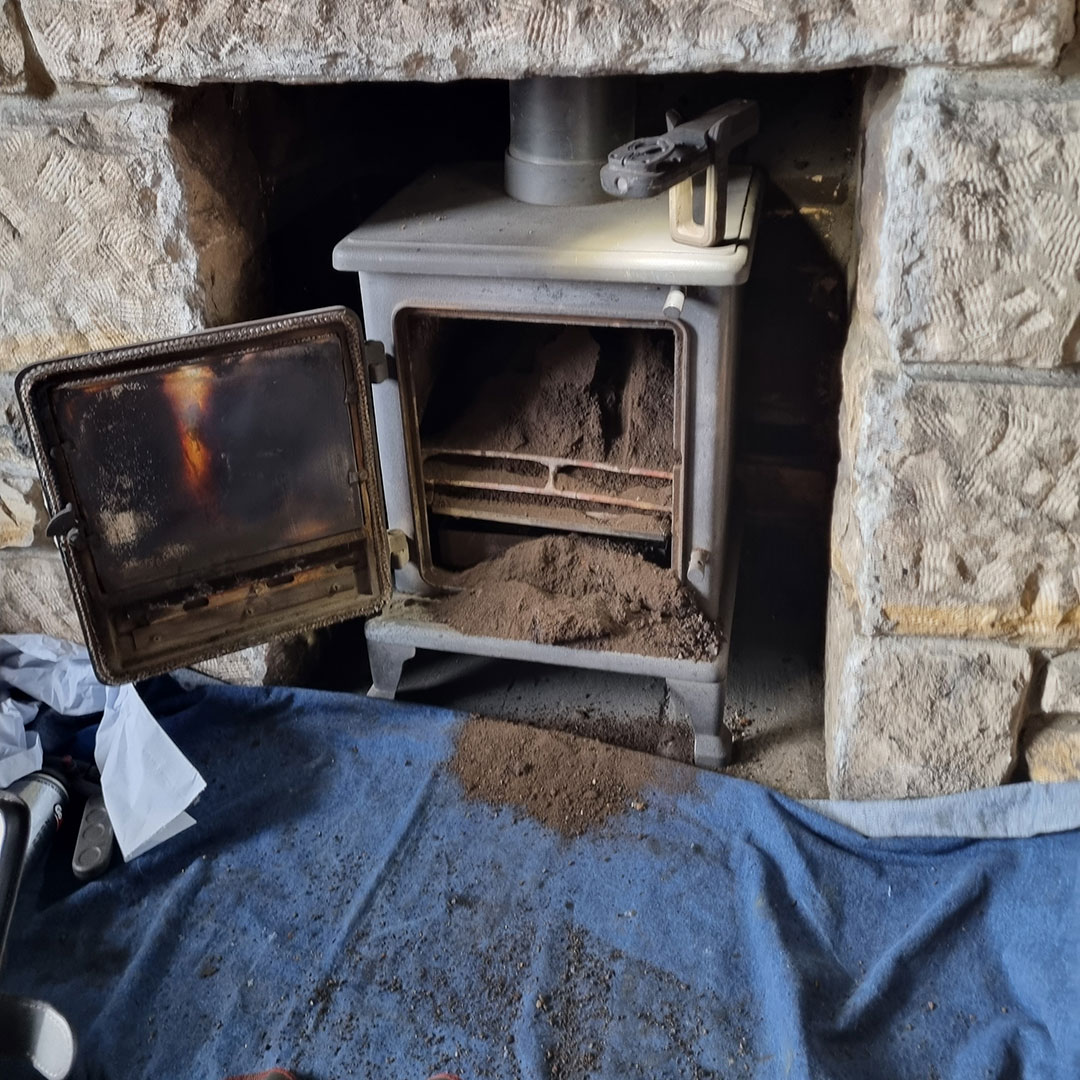
All soot and debris removed during the sweep will be securely sealed in a bag and responsibly disposed of before we leave your property.
Stove & Chimney Advice
We’re often asked similar questions during appointments, so we’ve put together this helpful guide to keep your stove burning safely, efficiently and cleanly.
If you can’t find the answer you’re looking for, just ask us during your sweep — we’re always happy to help.
Do you have a working Carbon Monoxide (CO) alarm?
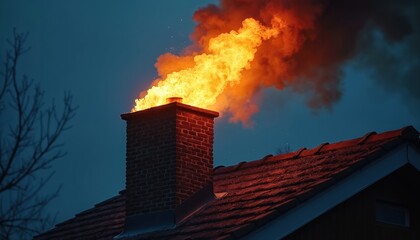
Over 3,000 chimney fires are reported in the UK every year, and over 60 deaths annually are linked to Carbon Monoxide poisoning.
CO is colourless and odourless — often called the “silent killer.”
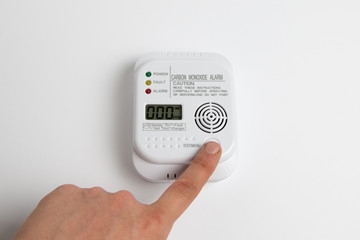
A CO alarm can cost as little as £17 and is an essential safety device.
We’re happy to advise on correct placement during your sweep.
My firebricks are cracked — do I need to replace them?
Small cracks are common and usually nothing to worry about.
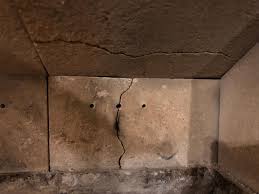
Replacement is recommended if:
- Bricks begin crumbling
- Pieces fall into the stove
- Gaps exceed 5mm
We carry vermiculite bonding materials on our van and can often repair minor damage during your appointment.
Check your door seals first. Frayed, loose or worn rope seals allow excess air into the stove, causing it to “overfire.”
It may also indicate a fault with the air control mechanism.
We’re happy to inspect this during your sweep and advise on the best solution.
This is usually caused by:
- Damp or poor-quality fuel
- Running the stove too cool for long periods (“slumbering”)
If you see black streaks from the edge of the glass, it may indicate a failing glass seal.
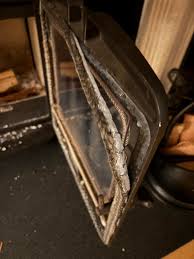
We offer a glass seal replacement service and can inspect this during your sweep.
When first lighting
This is often caused by a plug of cold air sitting in the flue or liner.
Try the “upside-down” method:
- Stack dry kindling
- Place a large firelighter on top
- Light from the top
This produces strong initial heat to push cold air out before the fire fully establishes.
When opening the door to refuel
Possible causes include:
Downdraught
Wind conditions or an unsuitable chimney cowl can force smoke back down the flue. A suitable anti-downdraught cowl may help.
Lack of ventilation (common in modern homes)
Well-sealed homes can restrict airflow. Your stove may pull air — and smoke — back down the flue.
Try opening a window slightly. If this improves things, you may need a permanent air vent installed.
Opening the door too quickly
Before refuelling:
- Open air controls fully
- Wait a few moments
- Open the door slowly
Why is my stove not burning hot?
If your stove doesn’t seem to be producing the heat you expect, there could be a few simple explanations.
New stove?
Modern stoves are far more efficient and eco-friendly than older models. They burn cleaner and are more controllable, so the heat output can feel different compared to older appliances.
Fuel quality matters
If you burn wood, moisture content is crucial. Logs should be below 20% moisture — the lower the better. Damp logs won’t burn as hot and produce less usable heat.
Using a multi-fuel stove correctly
Multi-fuel stoves usually have two air controls:
- Under-grate air (for smokeless coal)
- Over-air control (for wood)
Wood and smokeless coal burn differently and generally shouldn’t be mixed.
When burning:
- Smokeless coal: Empty the ash pan daily.
- Wood: Leave a small bed of ash and gently compact it — this helps logs burn hotter and last longer.
Strong odours are often caused by:
- Burning damp logs
- Prolonged low-temperature burning
- “Slumbering” the stove overnight
When a stove burns too cool, smoke particles condense inside the flue, forming creosote. This can:
- Produce unpleasant smells
- Increase chimney fire risk
- Cause nuisance smoke
For safer burning:
- Use logs below 20% moisture
- Avoid prolonged slow burning
- Allow the stove to reach proper operating temperature
How often should my chimney be swept?
Regular sweeping is essential for safety and is often required by household insurance and flue warranties.
Recommended sweeping frequencies:
- Smokeless fuel: At least once per year
- Wood: Quarterly while in use
- Bituminous coal: Twice per year while in use
- Oil: Once per year
- Gas: Once per year
Wood produces more soot and creosote, which is why more frequent sweeping is advised.
If you ever have concerns about performance, smells, smoke, or safety, we’re always happy to take a closer look during your appointment.
A well-maintained stove should burn cleanly, efficiently and safely — and that’s exactly what we’re here to help you achieve.